Who Is the City For?
Are we rebuilding property, or are we building places worth living in?
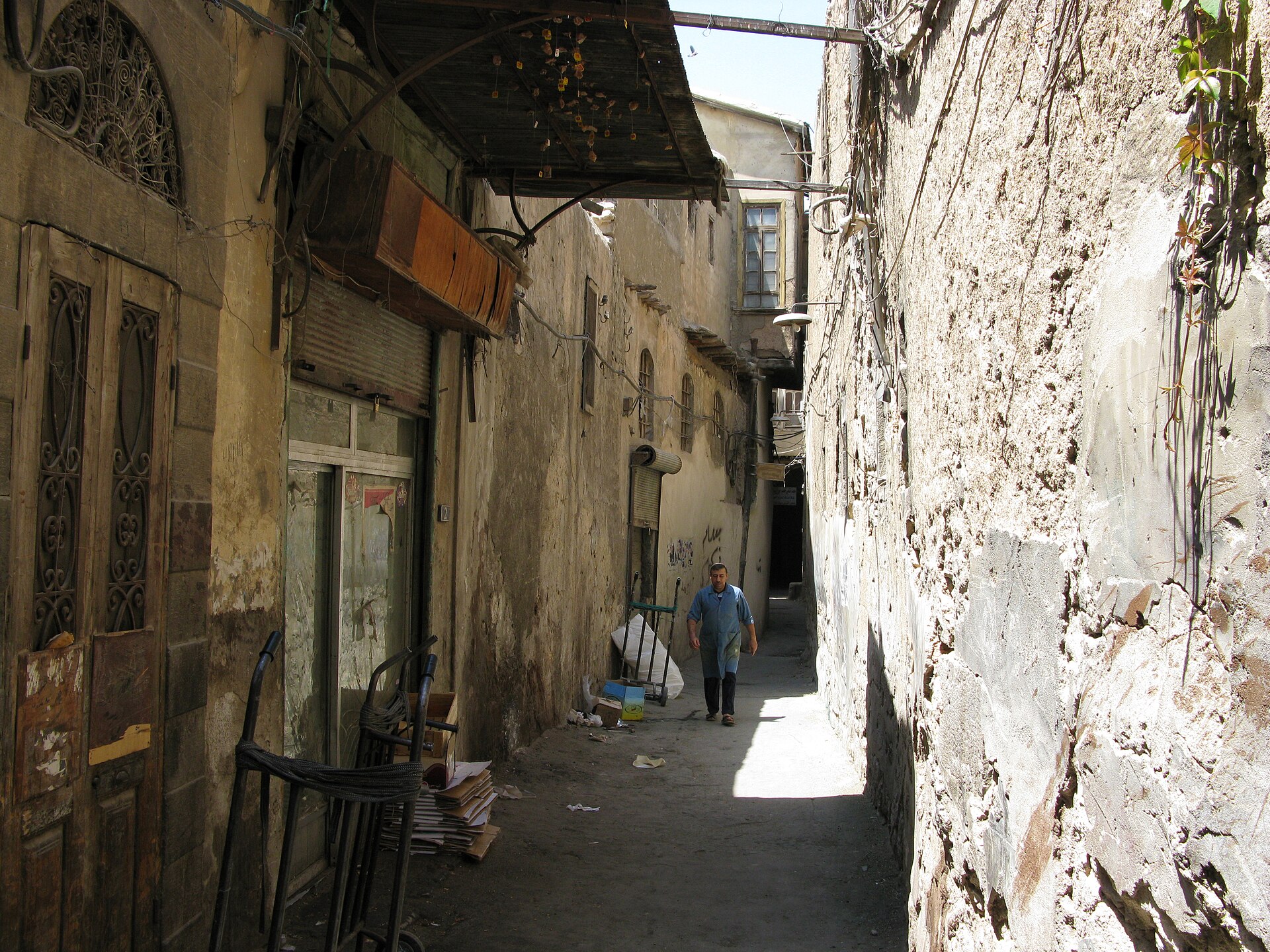
Beyond the building
A building can be considered through ownership, cost, investment, construction time and financial return. A city is experienced through relationships between buildings, streets, public spaces, transport, services, work and everyday encounters.
A building may succeed financially while contributing little to its surroundings. Conversely, an attractive architectural proposal may fail if it is unaffordable, difficult to maintain or disconnected from the needs of its users. Economic viability and public value must be considered together.
The property boundary is a useful legal distinction, but an incomplete account of consequences. A frontage changes a street; a development changes movement, demand for services and the possibilities available to neighbors. What responsibilities follow from effects that ownership alone does not contain?
Why this question matters in Syria
Reconstruction and urban development raise questions about housing, employment, property rights, infrastructure, investment, heritage, displacement and the future of neighborhoods. This is a framework for inquiry, not an assessment of particular projects or current investment volumes.
People need housing and functioning services; economic activity matters. Existing communities, local livelihoods and the quality of the built environment also matter. These needs cannot be reduced to choosing between building quickly and designing beautifully.
How can development meet immediate needs without creating avoidable long-term costs? Experiences differ between places and between people who stayed, moved, were displaced or are considering return. No single account can stand for all of them.
What counts as successful development?
Success requires more than one measure. A numerical gain in housing may matter greatly, but it does not answer every question about affordability or access. Design quality matters, but it must survive use, maintenance and changing circumstances.
- The number and affordability of homes delivered.
- Employment and viable businesses.
- Access to services, transport and public space.
- Building quality, safety and adaptability.
- Continuity or transformation of local cultural character.
- The needs and rights of existing residents.
- Environmental and financial sustainability.
- The capacity to support everyday social life.
These measures may reinforce one another or conflict. Transparent reasoning should show which trade-offs are being made, by whom and with what accountability. A proposal must also make room for evaluating what happens after completion.
Different people, different stakes
Residents may consider continuity, safety and daily costs; renters may ask whether they can remain; people considering return may need clarity about rights, services and work. These are perspectives to consider, not statements that every member of a group thinks alike.
Property owners, developers and investors may ask about risk, finance and predictable decisions. Architects and craftspeople may weigh quality, responsibility and working conditions. Local authorities must consider services and public obligations. Future generations cannot attend the meeting, but will inherit its consequences.
Whose stake becomes visible first? Who can obtain advice, influence a decision or challenge an error? Participation means more than inviting comments after the central choices have already been made.
The questions beneath the question
- What makes a neighborhood a good place to live?
- Who should have a say in its future?
- How should development balance housing, investment and public space?
- What should be preserved, adapted, replaced or newly created?
- How can architectural quality be economically viable?
- Who bears the costs of long-term problems?
- What responsibilities do developers, professionals, institutions and residents have toward one another?
- What should be different about Syrian cities in ten, fifteen and fifty years?
These horizons invite reflection on consequences; they are not predictions. The purpose is to expose assumptions and identify decisions that deserve evidence, public reasoning or a different process.
Imagine the city across generations
A street, building or service may outlast the conditions under which it was designed. Thinking across generations asks what should remain adaptable, what maintenance will require and which costs are being passed forward.
The dates are conceptual horizons anchored in this discussion, not forecasts. Any future visualization should be identified as an illustration rather than documentary evidence.
- 2036 — choices and projects whose consequences are already taking shape.
- 2041 — the urban and social conditions the next generation may inherit.
- 2076 — the long-term legacy of today’s decisions.
Contribute your perspective
Respond to a question, describe a local example, suggest a reliable source or share a short reflection. State what you observed directly, what you infer and what requires further investigation. Avoid identifying people or disclosing sensitive details unnecessarily.
Submissions are reviewed before any public use. Sending material does not guarantee publication. You may request anonymity in public-facing work while providing a private contact method for review.
What happens next?
Contributions can help sharpen future discussions, identify research questions and inform potential public-facing work. No publication date, event or outcome is promised.
The aim is not to assemble a single ideal city from disconnected preferences, but to make the relationships between needs, rights, resources and responsibilities more intelligible. What would change if public value were considered from the start rather than added at the end?